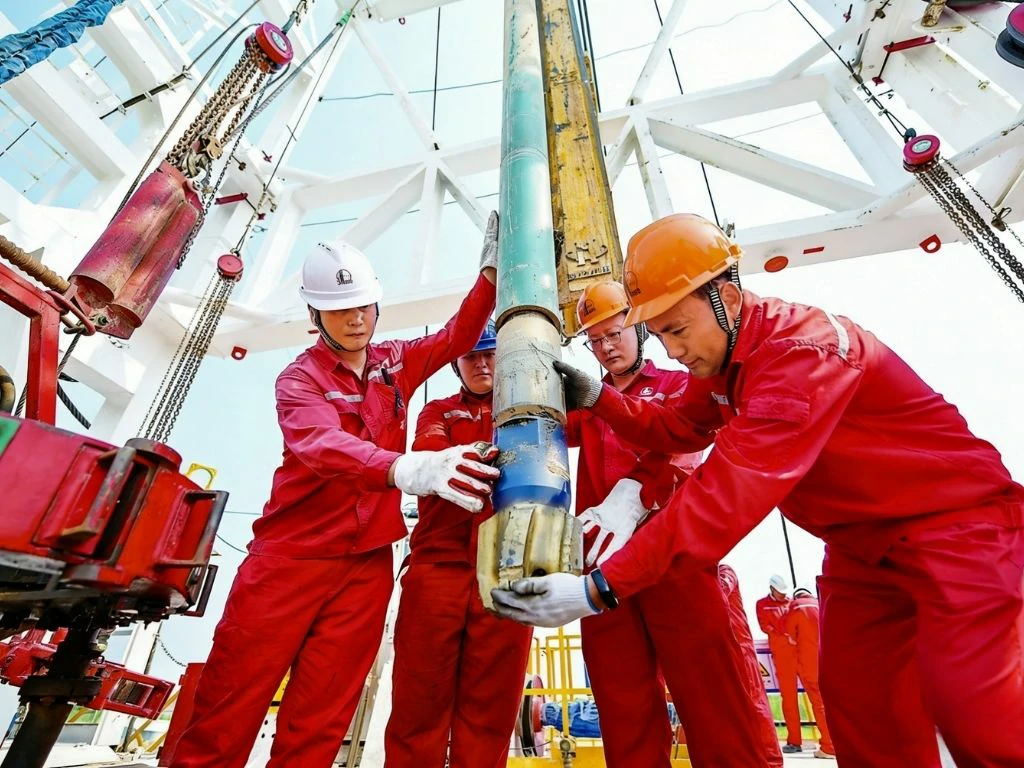
Against the backdrop of energy transition and the accelerated evolution of a new round of technological revolution, the development of oil and gas drilling technology faces many challenges. Firstly, with the deepening of oil and gas exploration and development towards deepwater, deep water, unconventional and other fields, the deterioration of resource quality and the complexity of operating environments have further intensified, and the difficulty of development has continued to increase, which has put forward higher requirements for drilling technology; Secondly, the global energy transition has promoted the low-carbon development of the oil and gas industry chain, which has put forward new requirements for the direction and goals of drilling technology development; Thirdly, digitalization and intelligence are leading a new round of technological and industrial transformation, giving rise to major disruptive innovations, and continuously penetrating and integrating into the oil and gas industry, requiring drilling technology to seize opportunities for digital development.
In order to improve the ability to adapt to complex formations and environments, meet the needs of increasing production, reducing costs and increasing efficiency, and promoting low-carbon development in oil and gas exploration and development, drilling technology is developing towards high performance, low cost, intelligence, and green environmental protection under the promotion of high-tech such as information technology, artificial intelligence, and new materials.
After years of continuous research and development, China has developed a series of supporting oil and gas drilling technologies, which basically meet the needs of oil and gas exploration and development. However, there is still a certain gap between China and foreign technologies in high-performance intelligent rotary guidance systems, ultra-high temperature downhole measurement tools, and continuous pipe drilling technology. Under the requirements of ensuring national energy security and promoting high-quality development of oil and gas, it is necessary to accelerate the research and application of key drilling technologies in the fields of "two deep, one non, and one old", green, low-carbon, and digitalization, and support the creation of new quality productivity in the upstream of oil and gas.
- One is to address the challenges of high temperature, high pressure, and high stress in deep and ultra deep oil and gas, and to develop drilling technologies such as deep and ultra deep optimal fast drilling, high-temperature and high-density wellbore working fluid systems, and 220 degree Celsius downhole measurement and control instruments to enhance the ability to operate in complex environments in deep and ultra deep layers.
- Secondly, in response to the high risks and complex geological environment of deepwater drilling operations in the ocean, safety drilling technologies such as deepwater pressure control drilling, dual gradient drilling, and non riser drilling have been developed to improve the safety and reliability of offshore oil and gas development.
- Thirdly, in response to the challenges of poor efficiency and difficulty in reducing costs and increasing efficiency in unconventional oil and gas development, we have developed drilling technologies such as 5000 meter long horizontal wells, remote detection while drilling, and intelligent rotary guidance systems to significantly reduce the cost per ton of oil and achieve economic and efficient development of shale and tight low-permeability oil and gas reservoirs.
- Fourthly, in response to the complex oil gas water relationship and low single well production in old oil fields, research has been conducted on drilling techniques such as casing drilling, high-level branch drilling, maximum reservoir contact (ERC) drilling, continuous pipe drilling, ultra short radius radial horizontal well drilling, old well sidetracking, and biomimetic wells to improve single well production and maximize contact with remaining oil, thereby enhancing the overall efficiency of single wells.
- The fifth is to focus on new energy fields such as high-temperature geothermal and dry hot rock development, underground space energy storage, carbon dioxide storage and utilization, and energy conservation and emission reduction throughout the entire process of oil and gas development. Research will be conducted on special drilling processes and low-carbon drilling technologies such as microwave drilling, plasma drilling, U-shaped well drilling, and fuel cell drilling equipment that meet the requirements of new energy development, in order to achieve green and low-carbon development of the oil and gas industry.
- The sixth is to focus on the digital transformation and intelligent development of the oil and gas industry, using technologies such as big data, artificial intelligence, and digital twins, and leveraging automated drilling equipment and high-end intelligent new materials to develop intelligent drilling technology, monitor and optimize the drilling process in real time, and achieve fully autonomous intelligent decision-making and closed-loop control of oil and gas drilling.